
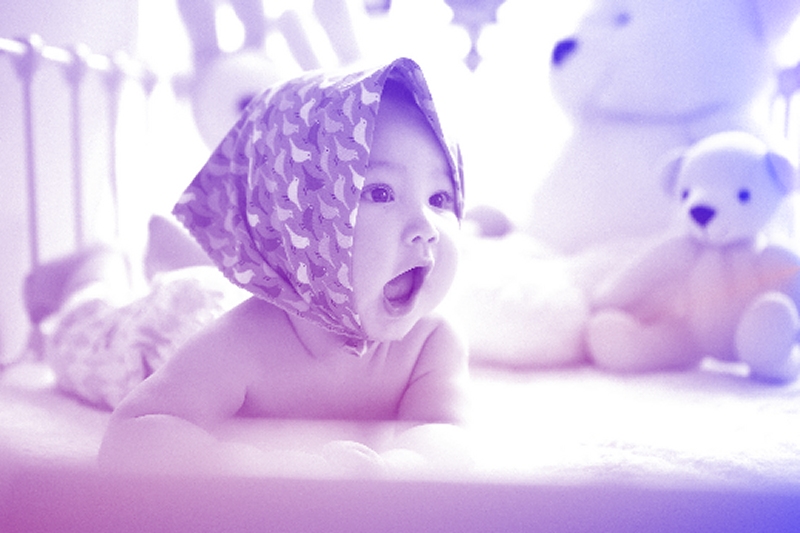
2020 was a momentous year for the whole planet. However, it also included a significant personal event for me: I became a parent to a baby girl in the September. This new phase of my life also meant I became part of a queer family as I am coparenting my little girl with a same-sex male couple.
My route to parenthood has been an interesting one; for people who would like to hear more on this please do listen to the BBC sounds podcast ‘Pride and Joy’ episode titled ‘no blueprint’, where I talk more about becoming a parent. Since becoming part of a queer family I have reflected on bisexual visibility because my bisexual identity has been notably absent from discussions about my family situation.
To give flavour to this experience I will share two conversations which particularly stood out. The first was a difficult and emotional conversation with a medical professional at a private in vitro fertilisation (IVF) clinic who argued that I was not considering the emotional well-being of any offspring I might have by deciding to try for a family with a same sex couple. The second was a heart-warming conversation in which I informed various aunts, uncles and cousins that I was pregnant. They showed me nothing but love and support. One relative remarked “all parents are just working it out as they go along, tell the naysayers that it is none of their business!”. All of these conversations, however, focussed on diversity at the level of the family unit only (i.e. a queer family) which interests me as I consider how to help my daughter appreciate all of her parents’ identities.
Should I communicate my sexuality to professionals involved in my daughter’s life, particularly as at this point in time I am single?
I currently believe I should because I strongly feel that the queerness of our family and the fathers’ relationship as a same sex male couple – being immediately visible – could otherwise dominate professionals’ understanding of our situation. Every person within the family is likely to have an influence on my daughter regardless of the importance placed on particular identities by outsiders. Therefore, I feel it will be important for me to make bisexuality visible in a familial situation in which it is likely to be missed. How I do this appropriately, for my daughter’s well-being as well as my own, is something I am currently figuring out!
How can I communicate to my daughter all elements of her family’s diversity? I have already purchased a range of LGBT children’s books to read with my daughter. I have created a personalised story of my daughter’s journey so that she has a strong sense of identity and belonging from the beginning.
Unsurprisingly, our particular situation is not yet represented in children’s fiction and bisexuality also seems quite absent in books for early years. I assume this is because children’s books present active relationships as a way to communicate diversity, thereby reinforcing the gay-straight binary. I am disappointed in this and will continue to hunt out bisexual books for the youngest readers, however, I still feel that using the literature currently available to introduce my daughter to a range of identities and family units will help her to appreciate diversity and be inclusive in her thinking more generally.
I also look forward to the return of Prides (2021, fingers crossed!) as a forum through which to celebrate all aspects of LGBT identity, including my own. I am particularly conscious that I need to communicate my sexuality to my daughter in a way that her fathers will not. How I do this will change and develop, I am sure, over time.
How can I ensure my bisexual identity does not become subsumed into the queer identity of my family unit? This is a particularly tricky one for me as I can see how the visibility of my family unit and the fathers’ relationship is likely to dominate an outsider’s understanding of us all. My bisexuality is likely to be missed as when I am single my sexuality seems irrelevant to others and if I enter into a relationship my sexuality tends to be assumed by reference to the current relationship unless I communicate otherwise. This is a difficulty for many bisexuals but I am conscious that my family situation may make the process more complicated. Currently I am involved in my local bisexual group which is running online due to COVID which helps me to feel connected to the bisexual community.
Remaining actively involved, however, will be difficult when groups start to return to face-to-face meetings and I will need to think about how I can engage with the bisexual community in ways that work for my situation and give me support and fulfilment.
My journey to becoming a parent is now over but my parental journey is only just beginning. How my journey will pan out in terms of my queer family unit and my individual bisexual identity is impossible to predict. However, I am looking forward to the journey and am confident that the dads and I will continue to communicate about and reflect on this for our daughter’s well-being and our own.
Francesca