
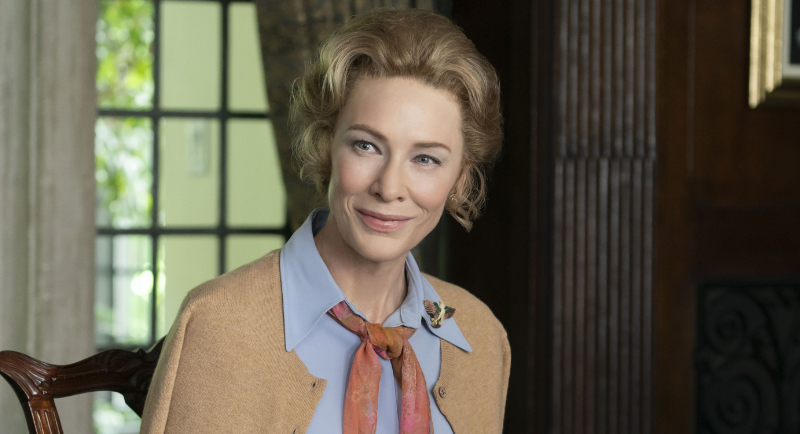
A welcome addition to the iPlayer last summer was “Mrs America”, the story of the movement to ratify the Equal Rights Amendment (ERA) in the USA.
Drafted way back in 1923, the ERA would have guaranteed equal legal rights for all American citizens regardless of sex – to end the legal distinctions between men and women in matters of divorce, property, employment, and other matters. It was 1923, so it was all about breaking down the barriers within the binary rather than shattering the binary itself.
While various edits to the text took place in the ensuing half century, it reads:
“Section 1: Equality of rights under the law shall not be denied or abridged by the United States or by any state on account of sex.
“Section 2: The Congress shall have the power to enforce, by appropriate legislation, the provisions of this article.
“Section 3: This amendment shall take effect two years after the date of ratification.”
As a constitutional amendment it needed more than to be simply passed by Congress or the Senate, but to be approved by a clear majority of the fifty states.
It took from 1923 to the start of the 1970s to be brought forward as a law, and after being ratified nationally in 1972 a deadline of 1979 was set for the required 38 states (three quarters) to also pass the amendment. A fiercely contested extension to 1982 still was not enough, and the “38 states” line was eventually crossed in January 2020. However that gap of four decades since the deadline, and several states having recanted their ratifications, it remains a contested area of law rather than a clear part of the US constitution.
But in 1972 all those plot twists lay in the future and so both women’s liberation campaigners and conservative opponents had everything to fight for and a bitter struggle ensued whose story unfolds in this nine-part drama.
Enough of the history, what about the TV show?
The series stars Cate Blanchett as anti-ERA activist Philis Schlafly, Uzo Aduba as Shirley Chisholm and Rose Byrne as Gloria Steinem alongside a host of other leads – each taking their turn as the focus of the story over nine epsiodes. Though the focus shifts around all the key players’ stories intertwine and overlap.
The tale focuses on people on the pro-ERA side of the battle but there’s lots of screen time for both sides. It makes plain that whichever side you were on, the battle that raged through the 1970s over the ERA was in part about building the kind of society you wanted to see and in part about interpersonal ego contests over who on either side got to be the centre of public attention or build themselves a profitable career. It’s a great human story with neither side painted as flawless. It’s probably fair to say that in the end no-one gets quite what they want.
There’s a great cast portraying powerful characters and it does make for great viewing.
Warning: spoilers ahead.
Episode five in particular has a bisexual subplot, albeit one that may raise the hackles (remember this is partly fictionalised and maybe reflective of attitudes from the time).
Brenda (Feigen) and Marc are a couple who we see in bed after some time apart. Marc asks if Brenda has seen anyone else since they were last together, and gets a carefully worded denial:
“I would never sleep with another man. You know that, I would never do that.”
He spots the extra word: “You would never sleep with another… man?”
“It was a very spontaneous thing… I had way too many drinks and then… I wasn’t not going to tell you, I just haven’t told you yet.”
Marc’s response is debateable in its acceptance. The implication that sex with a woman is permissible but with a guy would not be can be read as denying or devaluing the sexual and emotional value and reality of sex between women, after all. On the other hand: this is the seventies.
He explains to Brenda: “It’s okay. Come here. Look if was another man, aha, that would be something else entirely but a woman, I mean that’s practically a rite of passage for a radical feminist.”
I mean I’ve always wanted to experience sex once with a woman.”
“Now you have.”
So some viewers will likely feel Marc is a difficult character. However Brenda is living the bi cliche, wanting the ‘best of both worlds’ while not being honest with her long-term partner about it. Having downplayed what has happened already to him, in next to no time she’s back smooching a girl again. Should we take this as negative representation? Over to you.
Mrs America is on the BBC iPlayer.