
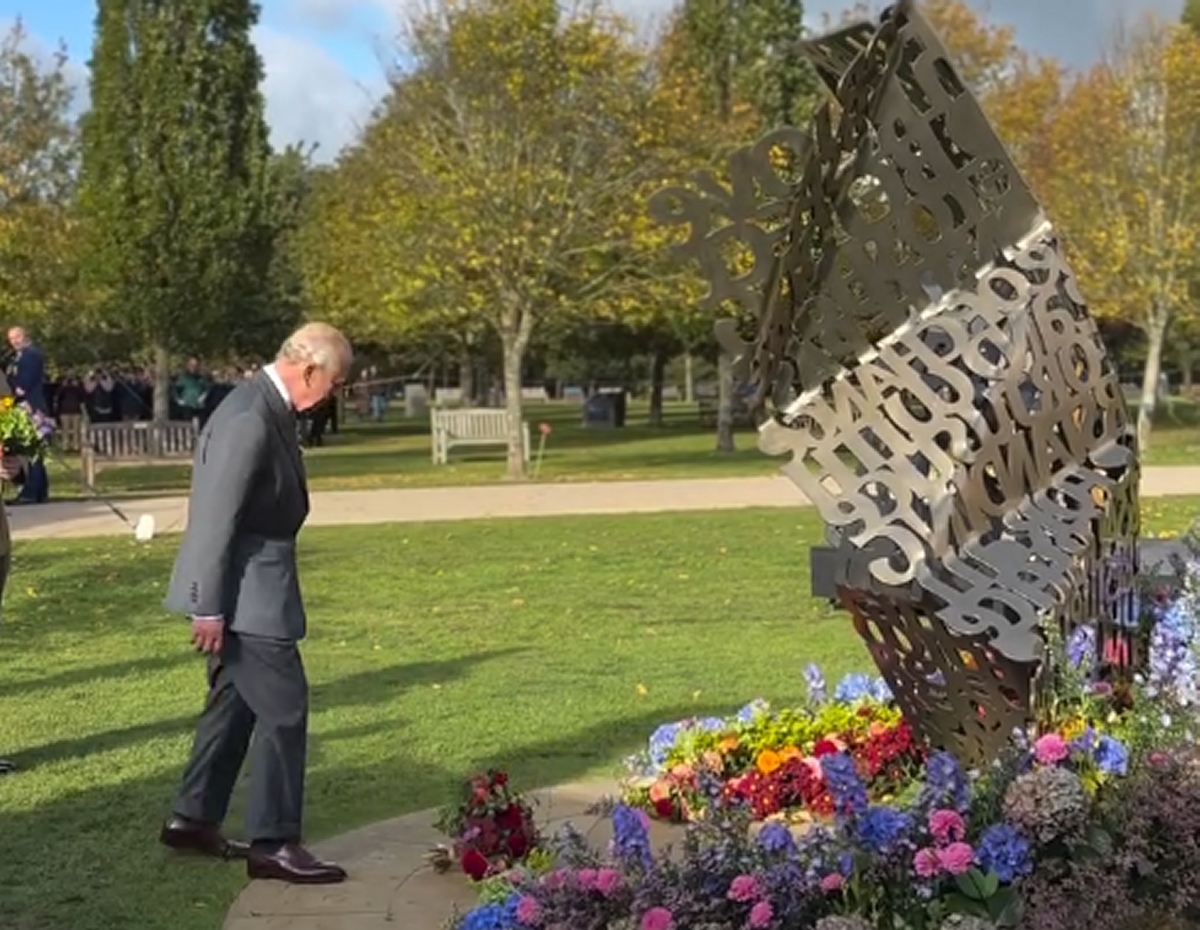
Today King Charles III unveiled a memorial to LGBT military personnel, in a mark of respect to those whose lives were ruined or ended by the ban on LGBT people serving in the UK’s armed forces.
The sculpture is part of the National Memorial Arboretum in Staffordshire and its unveiling marks 25 years since the ban on bi and gay people serving in the UK armed forces.
The ban was in place until 2000, after the then Labour government lost a court case where it was defending the ban in 1999. The claim that bi and other LGBT people openly serving would be too disruptive had collapsed in the face of logical debate in court. From the 1967 limited decriminalisation of sex between men in England and Wales, there had been a significant disjoint between the consequences of being outed as bi or gay in military versus civilian life.
The memorial was constructed following the Etherton Review, a 2023 report looking at the treatment of veterans who served during the decades where the bar on LGBT people in the armed forces was in place. It was one of nearly fifty recommendations that report put forward. Similarly there are initiatives to give people whose careers were unnecessarily ruined and pensions stolen compensation, and to return medals to those who were stripped of them when their bisexuality or homosexuality were discovered.
A few other LGBT memorials have bee established around the UK, like the Trans Memorial in Manchester’s Sackville Gardens close to a statue of World War II hero Alan Turing, or the Mil Veces un Instante installation currently on the fourth plinth in Trafalgar Square, London.
Nearly five years ago the Ministry of Defence said it would return medals to those who had had them removed.
Image: Instagram @theroyalfamily