
I first went to a BiPhoria meeting more than twenty years ago, way back in 1994.
I’d worked out I was bisexual some time around my sixteenth birthday – five years earlier.
With hindsight, I knew around twelve or thirteen, but didn’t have a label to put on this thing that I knew (given we were at the peak of 1980s Section 28 mania) I should best keep to myself.
At sixteen, I was out as bi to all of my sixth form but didn’t know any other queer people.
I wouldn’t really find other bis until I found BiPhoria. Back then it was a bright-eyed and bushy-tailed new monthly meet-up for bisexual people in and around Manchester.
The group is still active today and is the oldest bi group in the UK. Over the years it has grown to offer a myriad of social and support meetings, research publications, public speakers and outreach stalls. During the pandemic most of that had to be reshaped, but 2020 saw the group busier than ever with daily virtual meetings for the first six months to help people cope with the upheaval.
That night in 1994 wasn’t my first time in bi space. But it was the first time I’d been in a bi space I hadn’t had to lobby for and organise myself.
University brought an LGB society that was very “LG”. I was attending LGB conferences where I would volunteer a bi space or workshop and often find I was sat in a room on my own for an hour.
As bis we were pretty invisible back then and many of us had learned to keep our heads down because of the biphobia in the gay and lesbian communities as well as the mainstream.
One key thing with the group was that unlike those bi spaces I’d contributed to small conferences and events, this wasn’t a one-off, but a regularly repeated chance to hang out with other bis.
This wasn’t just “fleetingly meeting people and talk and then never meet again”. Here was a space to get to know people over time and make friends who lived in and around the same city. So exciting!
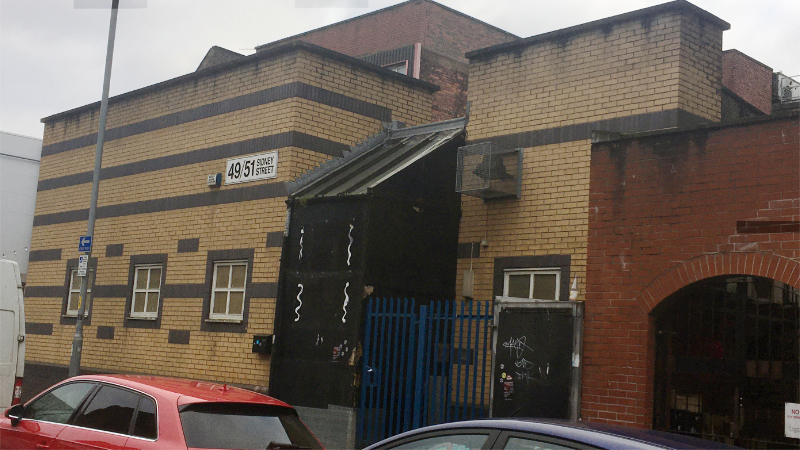
Back then we met at the Sidney Street Lesbian & Gay Centre, whose name gives an honest reflection of where bisexuals came in the pecking order. Every so often meeting rooms at the centre would be overbooked and upon arrival we’d find ourselves meeting in the kitchen or in the pub round the corner.
As a group, we were assigned use of a tray in a filing cabinet that we might keep our limited resources in. But no-one gave us the key to it. So what we really had was a filing cabinet we could perch a couple of cups of coffee on top of whilst talking.
Communication was through postal mailouts. People got in touch to know more about the group, or let us know about upcoming events of interest, by writing letters to us at our P.O. Box address. Before group meets someone had to remember to collect the mail.
Rather than a well-intentioned ‘I’ll post it on Facebook when I remember’ you’d have a half-dozen flyers for whatever upcoming event might be of interest to pass around and be taken home by anyone interested. 
Decision making was painfully slow. A side project, Bisexual Action Manchester, engaged the local council in debate about their policy of the non-existence of bisexuality among the bi political issues it sought to address.
We’d meet once a month and hammer out a letter. A month later, there’d be a typed copy we’d sign it and put it in the mail.
Another month on we would meet, read the reply, and agree a rough wording for our response.
With no quick way of rounding people up, dates for meetings were set on a ‘they’ll probably have written back by then’ basis.
There were times we got to the bar to talk and the person with the typewriter sighed that no, they hadn’t written back yet.
A simple discussion like that would go on for six months then. Today, it would be over in an afternoon’s worth of angry tweeting.
Decisions amongst ourselves were simpler. It took next to no time to agree that whenever the Pankhurst Centre, a local women’s project which had a transphobic door policy, sent us information about their events we would not share them with attendees. At the time it marked out a particular stance though in comparison with the trans-excluding London Bi Women’s Group.
What’s interesting is what hasn’t changed.

Growing bi visibility means people are less likely to write in asking: ‘Is this real? Am I not the only one after all?’ (granted, nowadays more by email than post!)
But the personal crisis moment when coming out still calls for a human face and connection for support and advice.
People who have come along to our monthly bi support meetings describe them as a special space.
This special place is somewhere you don’t have to defend the existence of bisexuality, or that your bi-ness is valid when you have a broad preference for people of this or that gender over those ones.
The experience of trying not to be erased into monosexuality whilst in a monogamous relationship is still just as real as when we railed against it together back in the 1990s.
The change all around us has been remarkable but BiPhoria being there is still surprisingly important.
To find a bi group like BiPhoria near you see the webpage bicommunitynews.co.uk/local-groups