
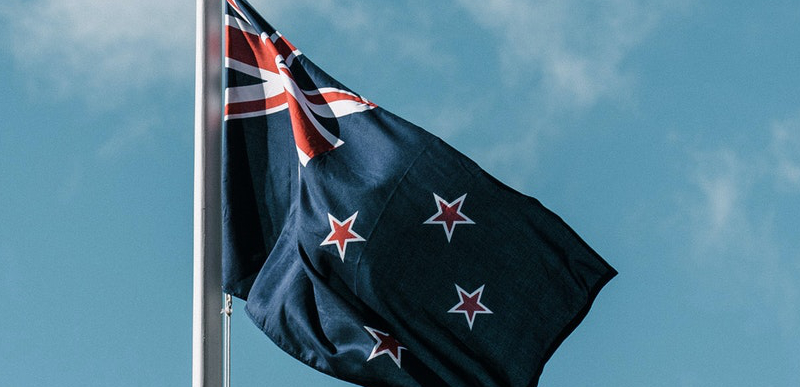
The parliament of New Zealand has voted to outlaw conversion therapy by a massive margin.
The vote passed by 112 votes to just 8.
The only party with MPs voting against was the National Party, broadly equivalent to our Conservatives, which split 25 for the bill and 8 against.
Moving the final reading, Deputy Prime Minister Grant Robertson said, “This legislation does two very important things. First, it rights a wrong—a hurtful, insidious, destructive wrong—but it also sends a message: a message of love, support, and affirmation to all in the rainbow communities. This is an historic day, and I am immensely proud that our Government is bringing this to the House as a Government bill. It will stand us alongside the other Acts on the walls of the rainbow select committee room as a triumph for New Zealand to be able to pass. ”
He added, “Let us be clear what this legislation does. Its purpose is to recognise and prevent harm caused by conversion practice and to promote respectful and open discussions regarding sexuality and gender. It deals directly to the falsehood that people’s sexual orientation, gender identity, or gender expression can somehow be fixed. As my straight-shooting colleague Kieran McAnulty said when he explained why he supports the bill: ‘There’s just no one who needs to be converted or changed here’.”
And he offered other words that would be very welcome whenever our own parliament finally gets to debate the legislation that was promised more than a thousand days ago: “I want to say something particular to our trans community. Throughout the debate on this legislation and this issue more generally, there has been an attempt to somehow separate the right for freedom from harm for those who affirm their gender identity or gender expression from others covered in this legislation. Too often, in recent times, we have seen trans community members put under intolerable scrutiny and stigmatised. As a rainbow community member, I want to say clearly tonight that I am extremely proud that this legislation puts gender identity and gender expression alongside sexual orientation when it comes to prevention from harm. Nothing less than that should be acceptable.”
Fellow MP Ginny Anderson recalled: “I remember, clear as day, as a young girl standing in the street watching—the first time I’d ever seen protests or the demonstrations for homosexual law reform back in the mid-1980s. The first thing I remember that struck me was that they were some of the most fabulous costumes I’d ever seen. Secondly, I remember wondering why people had been “shut in a closet”, and it took mum to explain what that actually meant. But what stuck with me the most was the hatred in the voices from the sidelines, using some of the most obscene words I’d ever heard, as a young person. And in the weeks and months after that, hearing those same words echoed around the playground and around the streets, as other kids learnt those words from adults. And it’s there, when I look back, I remember where that discrimination started and where it’s continued. It makes me think of how far we have come as a country, but yet still how far we have yet to go.”
As a Christian, Glen Bennett observed, “A friend of mine, Neil, spoke to me about the Christian church talking a lot about the love of God, the unconditional love of God, and who made us in their image. And this ban, this move tonight, helps to action this. It sends a strong message: that rainbow people, we’re not mistakes. We aren’t damaged. We don’t need to be fixed. God’s love encompasses all.”
Tamati Coffey reflected, “As a new dad, I think about my son. I think about the decisions that he’ll make in his lifetime. I think about the New Zealand that he’ll grow up in, and I want him to have the best of everything, like all of the parents in our country do. We want the best for our kids. But I don’t want a New Zealand which thinks that it’s OK to shout hate speech, where they think that it’s OK to convert you to change your identity. And that’s not just us saying it as parents, as MPs; actually through the submissions process, listening to our psychologists, listening to our doctors, listening to our nurses, it was them that came forward with their voices and said, “This is not appropriate. You do not need to change these young people. They are young and they are beautiful.” If only we all looked at our young people and saw them for what they were, which is a taonga, which is a beautiful little spirit, and whether or not they choose to one day love a male, love a female, or somewhere in the middle there as well, that actually, they’ll be OK. They’ll be looked after, they’ll be lifted up by the community that they live in, but most importantly, they’ll be lifted up by their family.”